
Harper Woods, Michigan is a small, quiet suburb tucked into the far northeast corner of Detroit’s metropolitan area. Often described as a “hidden gem” on the eastside, Harper Woods sits at the crossroads of Wayne and Macomb counties – bordered by Detroit to the west, St. Clair Shores to the north, and the affluent Grosse Pointes to the south and east. This strategic location (about 12 miles northeast of downtown Detroit) gives Harper Woods residents the best of both worlds: a peaceful, tight-knit community at home, with the big-city amenities of Detroit and the upscale conveniences of Grosse Pointe just minutes away. With a population around 13,500, Harper Woods has that everyone-knows-everyone feel. In fact, an image caption from a local guide proudly states “Harper Woods is a tight knit community located less than 20 minutes from downtown Detroit.” That captures its essence well – close to the action, yet preserving a friendly small-town atmosphere.
Established as a city in 1951, Harper Woods is one of Metro Detroit’s newer suburbs, and it grew rapidly in the post-World War II era. Its name comes from an early settler family (the Harpers) and the wooded terrain that once dominated the landscape. Today, Harper Woods is primarily a residential haven known for its modest homes, tree-lined streets, and easy commute to major job centers. It’s also a community in transition: the former Eastland Center mall – once a regional shopping mecca – is being redeveloped, signaling new investment and possibilities on the horizon. Through all these changes, Harper Woods has retained a reputation as “a good area for homebuyers looking for a comfortable lifestyle without an outrageous price tag.” In other words, this city offers great value. Affordable housing, convenient highways, and adjacent lakeshore recreation make Harper Woods especially appealing for those seeking suburban life on a budget. And while it doesn’t have the flashiest profile, residents take pride in their community. Homes are well-kept, neighbors greet each other warmly, and there’s a shared understanding that Harper Woods is “a suburban haven with a friendly atmosphere and convenient access to urban amenities.” If you’re looking for a low-key, welcoming place in Metro Detroit, Harper Woods might just win you over.
Housing Styles and Architecture
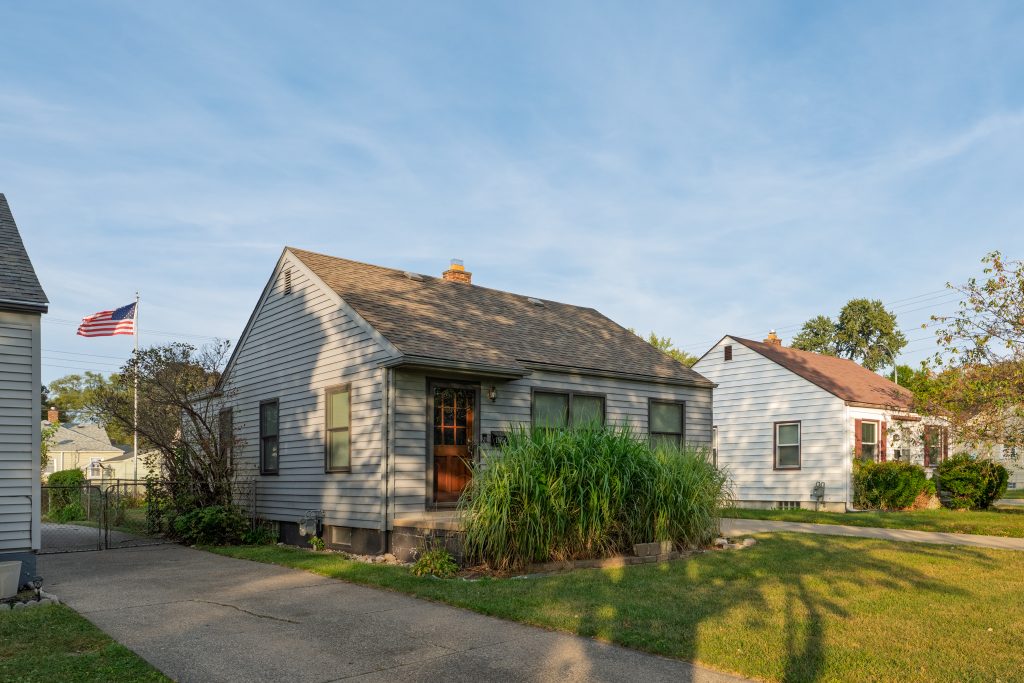
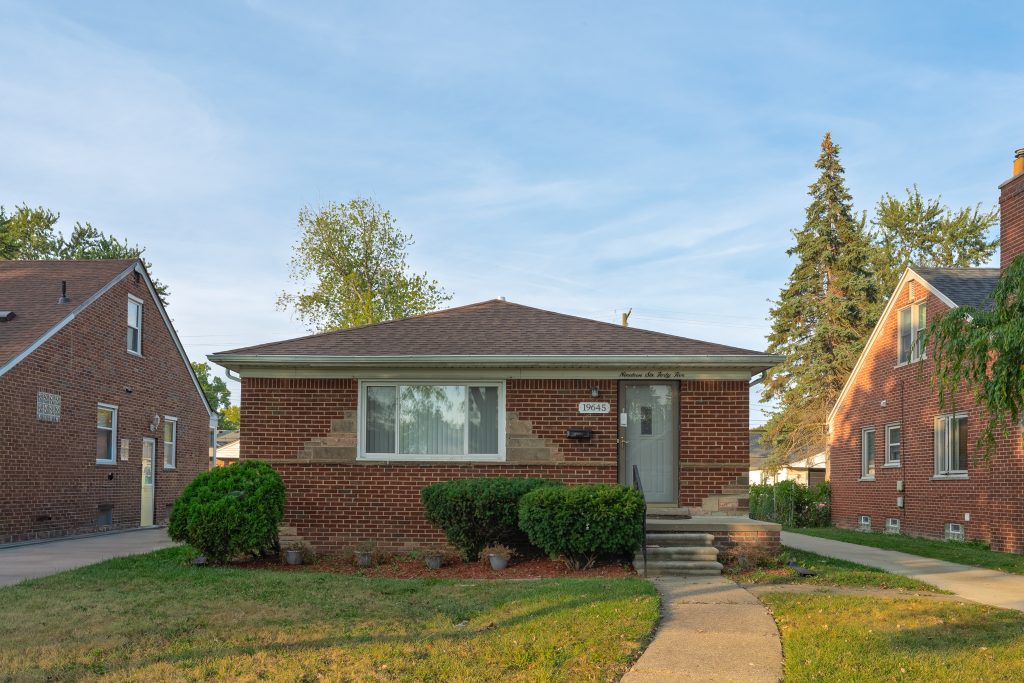
Harper Woods is predominantly a product of the 1950s, and its housing stock reflects that mid-century suburban boom. Drive through the neighborhoods and you’ll notice block after block of well-kept ranches and cozy bungalows, most built in the decade following World War II. These homes are typically 1-story or 1½-story, with brick or clapboard exteriors, and sit on neat, modest-sized lots. The classic Harper Woods house might be around 1,000–1,200 sq. ft., featuring 2-3 bedrooms, hardwood floors, and perhaps a finished basement or detached garage. The quiet, tree-lined streets give the area a charming Americana feel – think uniform post-war houses, each with a patch of green lawn and maybe a flag flying by the porch. Many homes boast fenced backyards, perfect for summer barbecues or letting kids play, and detached garages set at the rear of the lot for off-street parking. It’s clear that pride of ownership is strong here: properties are generally well-maintained, with manicured lawns and gardens showing the care of their owners.
Architecturally, styles are straightforward and functional. You’ll see a lot of brick ranches (some with hints of Colonial Revival in their shutters and doorways) and Cape Cod-style bungalows with dormer windows. These were homes built for GIs and young families in the mid-20th century, so they emphasize practicality over ornate design. That said, the consistency of design lends a pleasant cohesion to the neighborhoods. In some pockets, especially north of Vernier Road, there are larger split-levels and tri-level homes that were built slightly later, offering a bit more space for “growing families” as one guide notes. Those might feature attached garages and 4-bedroom layouts, providing options for buyers who need extra room. But even these tend to have a mid-century vibe – think broad front facades, picture windows, and perhaps a bit of flagstone or decorative ironwork accents that were popular in the 1960s.
One of Harper Woods’ biggest draws is affordability. Home prices here are significantly more budget-friendly than in the adjacent Grosse Pointe communities or even many other Detroit suburbs. A two-bedroom fixer-upper might be snagged for as low as ~$50,000, while a fully updated 3-bedroom ranch often falls in the $150K range – and even the nicest homes in the city rarely exceed the low $200s. The median sale price in recent years has hovered around $125,000, which is a compelling value proposition for first-time buyers. These affordable prices, combined with a trend of rising home values, make Harper Woods attractive both as a starter-home locale and an investment. Buyers can acquire a modest home at a low cost and build equity as the area grows. Investors too have taken note, sometimes purchasing and renovating homes to resell or rent out, given the demand for reasonably priced housing near Detroit.
While most Harper Woods homes are several decades old, many have undergone updates. Inside, you’ll find a mix – some houses have original pink tile bathrooms and knotty pine basements, reflecting their 1950s origins, while others have seen kitchen remodels, new roofs, and modern HVAC added by recent owners. There’s an opportunity for buyers who enjoy DIY or customization to get a solidly built house and make it their own. At the same time, move-in-ready options exist for those who prefer everything updated. The housing mix also includes a few small condo and townhouse developments, and some duplexes, but it’s largely single-family detached homes.
In summary, Harper Woods offers simple, solid housing that delivers big on value and comfort. You won’t find sprawling estates or cutting-edge architecture here – what you will find are homes with good “bones,” a neighborhood aesthetic straight out of the 1950s, and that irreplaceable feeling of a tight-knit community. For many Metro Detroiters, that combination is exactly what they’re looking for when they say they want a home in a quiet, safe, and affordable area.
Local Businesses and Conveniences
As a smaller suburb, Harper Woods doesn’t have a large downtown district, but residents still have a variety of shopping and dining conveniences at their fingertips – often literally just around the corner on one of the main roads. Three major thoroughfares define commerce here: Kelly Road, Harper Avenue, and Mack Avenue. Each provides a strip of local businesses that cater to everyday needs and a few unique favorites.
On Kelly Road (which runs north-south through the city’s west side), you’ll find handy spots like Yoshi Hibachi, a metro Detroit staple known for quick and tasty Japanese takeout – a great option for dinner on the go. Kelly has several other small shops, auto service centers, and carry-out restaurants sprinkled along it as well. Over on Harper Avenue (the city’s namesake street along the eastern border), locals might start their day at Eastside Bagel, a beloved no-frills spot famous for its fresh-baked bagels and orange juice – perfect for a Saturday morning breakfast run.
To the south, Mack Avenue forms the border between Harper Woods and Grosse Pointe Woods, and it serves as a shared commercial corridor for both communities. Mack Avenue in this area features a nice mix of establishments: there’s the cozy Mack Avenue Grille, a go-to spot for breakfast, lunch or dinner with a menu of comfort-food favorites. Just down the road, you can treat yourself to dessert at Ashby’s Sterling Ice Cream, an old-fashioned parlor scooping unique flavors that draw families from all around. Mack Avenue also hosts practical stops like a Kroger grocery store (super convenient for Harper Woods residents’ weekly shopping), pharmacies, banks, and a few boutiques. One thing to note: while Harper Woods has many basics covered, residents often hop over to neighboring cities for additional shopping. For instance, the nearest Walmart Supercenter is just a short drive north in Roseville (Harper Woods folks joke it’s practically theirs, given how close it is), and the retail big-box corridor along Macomb Mall in Roseville is within 10 minutes by car.
Historically, Harper Woods’ retail crown jewel was Eastland Center, a sprawling indoor mall built in 1957 that sat on the city’s southwest side. Eastland was a shopping destination for generations, housing major department stores and dozens of shops. However, like many malls, it fell into decline and recently closed. The mall’s demolition and planned redevelopment into industrial/warehouse space (with an e-commerce bent) are currently underway. While some residents were sad to see Eastland go, the redevelopment is expected to bring new economic activity (and potentially new jobs) to Harper Woods, and there are hopes it will spur additional business growth nearby. In the meantime, Harper Woods residents still have plenty of retail options in close proximity: from the boutique stores of Grosse Pointe Woods on Mack (selling everything from wine to pet supplies), to big retailers like Meijer, Lowe’s, or Target in adjacent St. Clair Shores and Roseville, most shopping needs are a quick 5-10 minute drive. The city is also only about 5 miles from Partridge Creek (an outdoor mall in Macomb County) and about 3 miles from the Grosse Pointe downtown districts (with upscale shops, cafes, and a hometown movie theater).
Dining-wise, Harper Woods leans towards casual, family-friendly eateries. Beyond those already mentioned, you’ll find pizzerias (such as local favorite Papa Romano’s), Chinese carryouts, and a couple of sports bars where neighbors gather to watch the game. One unique local spot is The Cracked Egg on Harper Woods’ border, known for hearty brunches and a friendly small-town vibe. And if you venture a couple minutes into Detroit’s far-east side, you can enjoy institutions like Moran’s Bar (a classic dive) or ethnic cuisine reflecting the area’s diversity (e.g., Polish or Italian fare). For more upscale dining or nightlife, residents often head to the Grosse Pointes or downtown Detroit – but the beauty is they don’t have to travel far to do so.
In essence, convenience is a hallmark of Harper Woods living. The city may not have its own giant downtown, but virtually everything you need is within a short radius. As one local realtor summed it up, Harper Woods features “the amenities of Grosse Pointe Woods and Eastpointe” without the higher price tag. Whether you’re grabbing groceries, picking up coffee, or enjoying a dinner out, Harper Woods provides easy access to it all, all while retaining that quieter residential feel once you’re back on your home street.
Parks
Harper Woods may be small in area, but it certainly doesn’t lack in parks and outdoor recreation. The city has invested in creating and maintaining welcoming green spaces for residents, adding to its family-friendly appeal. The crown jewel of Harper Woods’ park system is Salter Memorial Park, an approximately 8-acre community park that’s a true gathering place for locals. On warm summer days, Salter Park comes alive with activity – the smell of barbecue grills is often in the air as families cook out under the picnic shelter, and you might hear the bounce of a basketball from the popular courts where friendly pickup games run into the evening. The park’s playground is a magnet for children, complete with modern equipment where kids climb and slide while parents chat on nearby benches. A recent addition to Salter Park is an extended walking trail that loops around the park’s perimeter. It’s perfect for residents of all ages, whether you’re taking an evening stroll, doing a morning jog, or walking the dog. The trail is also stroller-friendly for young families. In the summer, you might catch informal community events there – from little league practice to pop-up R&B music performances that provide a soundtrack to weekend picnics (indeed, it’s noted that on warm days, you can hear the “subtle thump of R&B” from portable speakers as neighbors relax in the park).
Another key green space is Johnston Park, situated next to Harper Woods Middle/High School. It features multiple basketball courts and another playground that’s well-used, especially after school when students drop by to shoot hoops or hang out. Johnston Park is also the site for some city-organized fun – for instance, the Harper Woods Parks & Recreation Department hosts a summer concert series here, including the annual Harper Woods Blues Festival, where residents can enjoy free live music under the open sky. These concerts, held at the Johnston Park pavilion, are very popular and really emphasize that close-knit community vibe (neighbors often bump into each other and end up sharing picnic blankets).
Additionally, Harper Woods is expanding its park offerings. There are plans to revitalize Danbury Park – adding new playground equipment and landscaping – and even create a new pocket park on Roscommon Street. Pocket parks are small neighborhood green spaces, and this one will give residents in its immediate area a nice spot for a quick play or some quiet relaxation. The city’s commitment to improving parks shows an understanding that parks greatly enhance quality of life, even in a small city.
Perhaps one of Harper Woods’ greatest recreational perks isn’t within its borders but just beyond: Lake St. Clair. Harper Woods is only a short drive (5-10 minutes) from the shores of Lake St. Clair, via either St. Clair Shores or the Grosse Pointes. While Harper Woods itself isn’t on the lake, residents can easily access waterfront parks and marinas nearby. For example, the Nautical Mile in St. Clair Shores – with its public marinas, restaurants, and a waterfront park – is a brief trip up Jefferson Avenue. There’s also the Grosse Pointe Woods Lakefront Park (for which some Harper Woods residents, in certain zones that attend GP schools, can get access) offering a swimming pool, splash pad, and boat launch. And of course, the great Lake St. Clair Metropark (formerly Metro Beach) is about a 20-minute drive north, featuring a beach, pool, and nature center. So effectively, Harper Woods residents enjoy proximity to water recreation without the waterfront property price tag.
In everyday life, though, it’s the local parks that add joy – whether it’s kids burning off energy on the playground, adults getting exercise on the walking paths, or the whole community coming together for an outdoor event. One resident described summer in Harper Woods like this: “During warm summer days, the sweet, smoky smell of barbeque permeates the air [at the park] as kids run around the playground to burn off steam”. That slice-of-life image really paints what Harper Woods’ parks are all about: simple pleasures and community bonds. For a homebuyer, knowing there are clean, safe parks nearby is a big plus – it means there’s space to enjoy outdoors, socialize, and stay active, all within your own neighborhood.
Schools
Education in Harper Woods is served by a few different institutions, giving residents some choice in schooling. The primary public school district is the Harper Woods School District, a small district with all its schools located conveniently within the city. Harper Woods Schools operates four schools total: two elementary schools, one middle school, and one high school. Younger children typically start at Beacon Elementary (Pre-K through 2nd grade). Beacon is a nurturing environment for early learners, and it has been rated around a “C” on Niche’s grading scale – an average rating – but many parents appreciate the dedicated teachers and small class sizes. For grades 3-5, students move up to Tyrone Elementary, which has had a D+ rating on Niche, reflecting some challenges in standardized test performance. The district has been working to improve curriculum and support at this level, and despite the rating, families often note the caring, community vibe at Tyrone (with a student-teacher ratio around 18:1, kids get individual attention).
Harper Woods Middle School serves grades 6-8, and Harper Woods High School covers 9-12. These have historically faced academic struggles – the middle school was rated D- and the high school C- by Niche. However, Harper Woods High is known for “having caring, exceptional staff” who go the extra mile for students. The high school enrolls roughly 800-900 students, offering a fairly tight-knit high school experience. It provides the standard array of sports, band, and clubs, and the district has been partnering with organizations to bolster educational offerings (for example, there are after-school tutoring and credit recovery programs). Harper Woods Schools also recently implemented some STEM (Science, Tech, Engineering, Math) initiatives and career-focused programs to better prepare students for college or vocational paths after graduation.
School Zoning
One interesting facet is that a portion of Harper Woods is zoned to the Grosse Pointe Public School System. Specifically, the far southeastern area of Harper Woods (around the border of Grosse Pointe Woods) historically attended Grosse Pointe schools. Families in those pockets have access to some of the highest-rated public schools in Michigan, as Grosse Pointe’s schools are A-rated and well-regarded. In fact, the Niche “A+” rating for Grosse Pointe schools is noted in guides. This can be a selling point for certain homes in Harper Woods – you might find listings proudly mentioning “Grosse Pointe schools” as a feature (though those homes tend to be at the higher end of Harper Woods’ price range due to the premium on school district).
Charter Schools
Additionally, Harper Woods has a charter school option: Chandler Park Academy, a charter K-12 that operates in the area, with a C- rating. Some Harper Woods residents opt for Chandler Park, especially if seeking an alternative to the public district but wanting to stay within the community. The city is also not far from other educational resources – for instance, Macomb Community College’s south campus is just a short drive (for dual-enrollment or continuing education), and there are private schools in the Grosse Pointes (like University Liggett or various parochial schools) which Harper Woods families sometimes choose.
It’s important from a fair housing perspective not to label schools as “good” or “bad” too subjectively, but rather to cite factual metrics and options. Objectively, the Harper Woods district has room for improvement academically, as reflected in standardized test scores and third-party ratings. However, the district is relatively small, meaning students often get to know their classmates and teachers closely, and that sense of community carries over (e.g., school events are community events, and parental involvement is strong among those who are committed to the district). The city government and school board have been actively trying to improve outcomes – such as by seeking grants for technology, instituting reading intervention programs, and offering teachers additional training.
For a homebuyer with children, Harper Woods offers multiple pathways: the local public schools for a small-district experience, possible access to top-tier Grosse Pointe schools depending on address, or charter/private alternatives in reach. It’s wise for prospective residents to research the specific school zoning of any address (Harper Woods is unique in that two neighboring district boundaries weave through it) and perhaps visit the schools to get a feel. Many families have had positive experiences in Harper Woods Schools, especially appreciating the community feel and dedicated staff, even if test score data isn’t top of class. As one local insight noted, Harper Woods High School serves nearly 900 students with a 22:1 student-teacher ratio – indicating a setting where teachers can know their students by name, which can be a strong foundation to build on.
Community & Walkability
Community is at the heart of Harper Woods – it even shines through in small details like the way residents take great pride in maintaining their properties, signaling a collective commitment to keeping the neighborhood inviting. This is a place where neighbors know each other and look out for one another. The city runs a number of community programs (often through its active Parks & Recreation department) that draw people together. For example, in the summer, free community concerts are held at Johnston Park, as mentioned earlier, and these often coincide with family-friendly festivities. Harper Woods also hosts seasonal events: a community Halloween Trunk-or-Treat for kids, a holiday tree lighting ceremony in winter, and various youth sports leagues and library events year-round. All these foster an environment where it’s easy to meet fellow residents and feel a sense of belonging.
Walkability
In terms of walkability, Harper Woods is characterized as a car-dependent suburb overall. There is a grid of residential streets that are pleasant for walking (many lined with sidewalks), and you’ll often see residents taking evening walks or kids biking around the block. However, most shopping and errands are along the busier roads (Harper, Kelly, Mack), which means many people drive the few minutes to stores rather than walk. The Walk Score for Harper Woods is in the lower range (“Somewhat Walkable” in parts, but largely “Car-Dependent”). That said, because the city is compact (about 2.6 square miles), nothing is very far. If you live near Kelly or Harper, you could walk to a nearby café or convenience store. For instance, residents near the Kelly/Whittier area might stroll to a corner store or those near Mack might walk to Kroger. There are also residential pockets abutting parks where kids can easily walk to play. But the typical scenario is using a car for daily needs.
Public Transit
One positive is the presence of public transit routes through Harper Woods, which adds a bit of flexibility for those without a car. SMART, the suburban bus system, runs the 610 bus along Harper Ave (connecting to suburban hubs and malls) and DDOT, the Detroit city bus, runs the 17 Eight Mile bus along 8 Mile and up Kelly through Harper Woods. These routes mean one could, for example, take a bus to reach downtown Detroit or shopping centers, though schedules may be limited. The city’s proximity to I-94 also means car commutes are fast; if you work downtown, you can be on the freeway in minutes and downtown in ~20 minutes (barring heavy traffic).
Culture
Where Harper Woods truly shines in community terms is the neighborly culture. The city’s tagline for a long time was “Discover Harper Woods: The City of Homes,” emphasizing its residential, community-focused nature. People often mention that Harper Woods feels like a place “where everybody knows everybody.” Many families have been here for generations, and even newcomers quickly get welcomed into the fold. Social ties form through churches (Harper Woods has numerous places of worship reflecting a variety of faiths – from Christian denominations to the Albanian Islamic Center, showcasing diversity), through school events, and through simple daily interactions. For example, neighbors might chat over the fence or help each other with lawn projects; block clubs exist in some areas to coordinate neighborhood activities or address concerns together.
Commuting and Accessibility
Harper Woods might be quaint, but it’s certainly not isolated – one of its strong suits is how accessible it is to the wider Detroit metro area. The city is strategically placed along Interstate 94 (I-94), which cuts through Harper Woods’ southeast corner. This means residents can jump on the freeway within minutes from most homes and head straight into Downtown Detroit or out toward the northern suburbs. Downtown Detroit is roughly a 15-20 minute drive (about 12 miles) via I-94 west, making Harper Woods a convenient home base for those working in the city or frequently attending sports games, concerts, and cultural events downtown. In the other direction, I-94 east quickly connects to I-696 west, opening easy travel toward Oakland County (Southfield, Novi, etc.) or one can continue north on I-94 to reach Macomb County’s hubs like Mt. Clemens or Port Huron. In essence, Harper Woods sits at an eastside crossroads – between Detroit and the Macomb County suburbs, and just north of the Grosse Pointes.
Commuters to major job centers will find the drive manageable. For instance, getting to the automotive and tech jobs in Warren (at the GM Tech Center or various suppliers) is about a 15-minute drive via I-94 and I-696. Southfield’s office district is under 25 minutes via I-696. Even reaching Detroit Metropolitan Airport, which is on the opposite side of Detroit, is fairly straightforward – approximately a 40 minute drive by taking I-94 west all the way (without heavy traffic). Being near the junction of multiple freeways means options for alternate routes too. If I-94 is congested, residents can take surface roads like Harper Ave or Jefferson Ave to navigate around slow spots, or use 8 Mile Road (M-102) to cut across to I-75 or Gratiot Avenue (M-3) as needed.
For those who prefer not to drive or need public transit, Harper Woods has limited but useful bus service. The SMART Route 610 travels along Harper Avenue and provides service through Harper Woods into neighboring suburbs and down to a connection with the Gratiot Avenue bus line. This route effectively parallels I-94, giving access to the eastern suburbs and linking with the city of Detroit’s bus system at transit centers. Additionally, Detroit’s DDOT Route 17 runs along Kelly Road and 8 Mile, skirting Harper Woods’ edges, which allows some residents to catch a city bus that heads into Detroit’s east side. While most Harper Woods commuters rely on cars, it’s a plus to have these transit options for those who need them – for example, teenagers or seniors who don’t drive can still get to shopping centers or downtown via bus. Rideshare services (Uber/Lyft) are also readily available here due to the city’s proximity to denser suburbs and Detroit proper.
Local getting around within Harper Woods is quite simple. The city’s street grid is easy to navigate, and nothing in town is more than a 5-minute drive. Even without using the freeway, one can take Harper Avenue south and be on Detroit’s east side (near Jefferson/Chalmers) in minutes, or take Mack Avenue into the Grosse Pointes for a scenic drive along their main street. Eight Mile Road (M-102) forms Harper Woods’ southern boundary and driving west on 8 Mile quickly connects you to I-75 or Telegraph Road, key north-south routes on the metropolitan grid.
It’s also worth noting Harper Woods’ accessibility to cross-border travel. The city is about 20 minutes from the Detroit-Windsor Tunnel or Ambassador Bridge, giving relatively quick access to Canada (Windsor, Ontario) for those who might work in Canada or enjoy trips to our northern neighbor.
One future consideration: with the redevelopment of Eastland Mall into industrial space, there may be increased truck traffic and workforce commuting to that site. However, its immediate vicinity is right by I-94, so planners expect minimal impact on local roads. In fact, NorthPoint (the developer) cited Harper Woods’ “ripe for development” location close to I-94 as a key reason the site is attractive. This likely means more jobs close to home for residents, possibly even reducing some folks’ commute times if they find employment there.
Lastly, for air travel beyond Detroit Metro, Harper Woods is not far from City Airport (Detroit’s Coleman A. Young Municipal Airport, although it currently doesn’t have commercial passenger service) and about an hour to Flint’s Bishop Airport as alternative regional airports. For train travel, Detroit’s Amtrak station is about 15 minutes away by car, connecting to Chicago via the Wolverine line.
In sum, Harper Woods offers a smooth commuting experience for a variety of destinations. It’s a small, residential community that benefits from being plugged into the metropolitan transportation network. Homebuyers who work in the city or in neighboring suburbs will appreciate that Harper Woods provides a quiet retreat at day’s end without making them feel “cut off” from the action. The phrase “convenient location on the eastside” is often used to describe Harper Woods, and it’s well-earned – from here, whether you’re zipping downtown for work or taking a weekend drive up north, you’ll find your journey easy to begin and end in Harper Woods.
Buyer Profile & Appeal
Harper Woods is especially appealing to homebuyers seeking value and a peaceful neighborhood vibe. In many ways, it attracts a similar crowd to Eastpointe or St. Clair Shores – people who want to own a home in Metro Detroit without stretching their budget, and who appreciate a quieter, family-oriented environment. One local real estate expert put it simply: “It’s a good area for homebuyers that are looking for a good area at an affordable price. You get to live comfortably without the outrageous price tag.”. This rings true when you consider that for the price of a small condo in a trendier suburb, you can often get a single-family house with a yard in Harper Woods.
First-Time Buyers
First-time buyers are a key demographic here. Often, these are young couples or single professionals early in their careers who are ready to stop renting. Harper Woods gives them a chance to step into homeownership and build equity. The homes are modest but sufficient – perfect as a starter home that might later become a rental or a stepping stone to a larger home down the line. There’s also a subset of first-timers who specifically choose Harper Woods because they grew up nearby (maybe in Detroit or the Grosse Pointes) and want to stay close to family or familiar areas, but need a place that’s budget-friendly. For them, Harper Woods is a logical choice. They get a safe neighborhood, a driveway of their own, and a community similar to what they know, without leaving the Metro area they love.
Growing Families
Young families find Harper Woods attractive too. The City’s nickname “A Family Town” (informally used) is reflected in the environment: quiet streets for kids to ride bikes, parks for play, and community programs geared towards children. The housing stock, with many 3-bedroom homes, is well-suited for a growing family. Some families are drawn by the fact that certain addresses feed into Grosse Pointe schools – so they can access top-notch education while paying Harper Woods prices for a home. But even those attending Harper Woods Schools often speak of the close community feeling which can be great for kids (think smaller school setting where teachers know everyone). The presence of multiple places of worship and community centers also offers families in Harper Woods support networks and activities (youth groups, sports, etc.). Additionally, many of the larger split-level homes in the city (on streets like York, Roscommon, or Fleetwood) appeal to local families trading up from smaller homes or relocating from Detroit for more space.
Downsizers
Downsizers also have Harper Woods on their radar. For older adults coming from bigger, more maintenance-heavy properties (perhaps in northern Macomb or even out-of-state), Harper Woods’ single-story ranches and manageable lot sizes are ideal. They can easily find a 1,000 sq. ft. brick ranch that’s easy to maintain, in a friendly neighborhood where they don’t feel isolated. The city’s relatively low taxes and affordable prices mean downsizers can often buy a Harper Woods home outright after selling a larger home elsewhere, pocketing the difference for retirement savings. The community’s small size and events at places like the library or senior groups at the Parks & Recreation center help retirees stay active and social. Being near Grosse Pointe and St. Clair Shores also means quick access to amenities like waterfront parks, nicer restaurants, or cultural events, which retirees often enjoy.
Budget-Conscious Professionals
Another profile is the budget-conscious professional. For example, teachers, municipal workers, nurses – people with stable jobs that may not come with six-figure salaries – see Harper Woods as a way to secure a comfortable home within a 20-minute commute to major workplaces (be it Detroit hospitals, Warren factories, etc.). They value that they can have a detached home and garden here, whereas in other locales they might be limited to a condo or a long commute from far outskirts to afford a house.
Investors
Investors have also taken interest, since Harper Woods’ rising home values and strong rental demand make it promising for rental properties or flips. It’s not uncommon to see renovated homes in Harper Woods being marketed to both first-time buyers and investors.
In terms of lifestyle, Harper Woods appeals to those who want a quiet, suburban lifestyle with quick city access. You’re likely a person who doesn’t mind driving 5-10 minutes for groceries or entertainment, and you prefer the calm of a neighborhood where you can hear birds in the morning over the buzz of an urban center. Perhaps you work in Detroit but after hours you want to retreat to a place with less hustle – Harper Woods offers that retreat. It’s also attractive to people who have connections in both Detroit and the suburbs: for instance, if one spouse works downtown and another works in Macomb County, Harper Woods is geographically in the middle, making both commutes reasonable.
A final note is that Harper Woods can be seen as a bit of a “best-kept secret.” It’s not as widely talked about as some suburbs, which means there are opportunities to find deals or have less competition on houses compared to hotter markets like Ferndale or Royal Oak. Buyers who discover Harper Woods often remark on the “exceptional value” they find. In short, the city beckons those who want to maximize what they get for their money, enjoy a strong sense of community, and still be near the action when they choose. For many Metro Detroit homebuyers, especially those starting out or starting anew, Harper Woods fits that bill perfectly – a suburban haven that’s both accessible and affordable, with a charm all its own.